Top 6 Best Red Dot For 20 Gauge in 2026
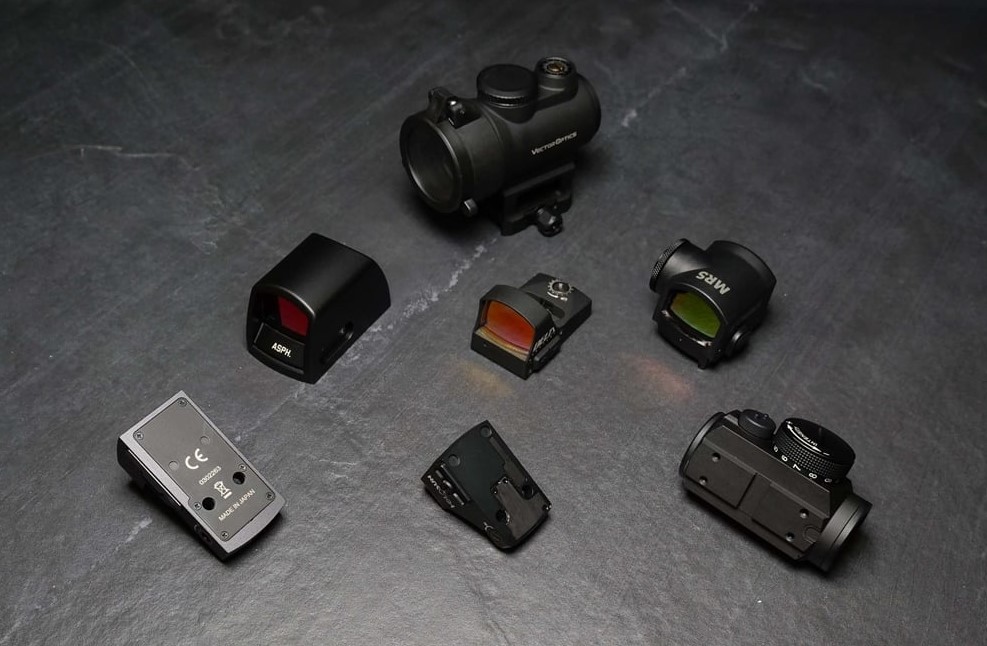
A 20 gauge shotgun is light, quick, and easy to carry, which is exactly why I like pairing it with a red dot. Whether I am using a 20 gauge for turkey hunting, deer drives, home-defense training, or casual range work, a good red dot helps me get on target faster without fighting the bead sight or lifting my head off the stock.
For this guide, I focused on red dots that make sense on a 20 gauge: durable enough for shotgun recoil, simple to pick up quickly, and practical to mount on a receiver rail, cantilever barrel, or optic-ready shotgun setup. My top overall choice is the Aimpoint Micro T-2 because it gives me the best blend of ruggedness, battery life, compact size, and confidence on a lightweight shotgun.
Quick Summary
The best red dot for a 20 gauge should be lightweight, recoil-resistant, bright enough for daylight, and easy to mount without turning the shotgun into a bulky setup. I prefer enclosed or compact tube-style optics for hard-use hunting shotguns, while open reflex sights work well when I want the lowest possible profile. For most shooters, the Aimpoint Micro T-2 is the strongest overall pick, the HOLOSUN 510C is the easiest to use quickly, and the Burris FastFire 3 is one of the best values for a simple 20 gauge setup.
Top Product List
Aimpoint Micro T-2 — Best for overall 20 gauge use
HOLOSUN 510C — Best for fast target acquisition
Trijicon RMR Type 2 — Best for rugged low-profile mounting
Vortex Venom — Best for lightweight turkey hunting
Burris FastFire 3 — Best for budget-friendly shotgun use
Sig Sauer Romeo5 — Best for affordable tube-style reliability
Top 6 Best Red Dot For 20 Gauge in 2026
Aimpoint Micro T-2
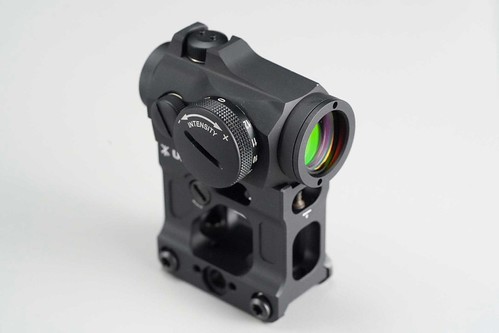
The Aimpoint Micro T-2 is my favorite red dot for a serious 20 gauge because it feels almost overbuilt for the job. It is compact, sealed, simple, and tough enough that I do not worry about rain, brush, bumps, or repeated shotgun recoil.
Dot size: 2 MOA
Style: Compact enclosed tube red dot
Battery: CR2032
Brightness: Multiple daylight and night-vision settings
Housing: Hard-anodized aluminum
Best use: Hunting, defensive shotgun setups, hard field use
Pros
Extremely rugged construction
Excellent battery life
Compact and lightweight
Clear glass with a crisp dot
Great choice for harsh weather
Cons
Expensive
Mount height must be chosen carefully
2 MOA dot may look small for close-range hunters
My personal experience with the Aimpoint Micro T-2 has been all about confidence. On a 20 gauge, I like that it does not make the gun feel top-heavy, and the enclosed design keeps debris and moisture away from the emitter. The dot is easy for me to track when I shoulder the shotgun quickly, especially when shooting from awkward hunting positions.
Online customer feedback is consistently strong around durability, battery life, and reliability. Most complaints come from price, not performance. Buyers usually treat it as a premium optic that costs more up front but rarely gives problems later.
For mounting, the Aimpoint Micro T-2 uses the Aimpoint Micro footprint. It usually does not mount directly to most 20 gauge receivers unless the shotgun has a compatible Micro-pattern mount. On most 20 gauge shotguns, I would mount it to a Picatinny rail using the included or compatible Micro mount, or use a dedicated shotgun mounting plate if available.
➤➤➤ Click Here to Check Price on Amazon
➤➤➤ Click Here to Check Price on OpticsPlanet
➤➤➤ Click Here to Check Price on EuroOptic
HOLOSUN 510C
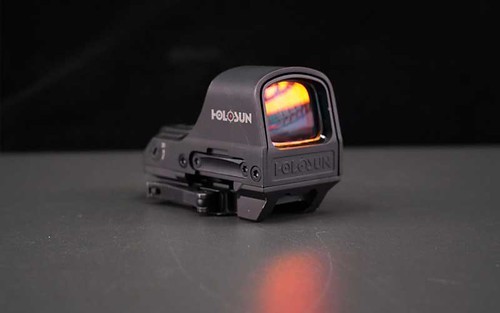
The HOLOSUN 510C is the red dot I like when speed matters most. The large viewing window makes it very forgiving on a shotgun, and that matters because a 20 gauge often gets shouldered quickly in the field.
Reticle: Multi-reticle system
Style: Open reflex sight
Battery: CR2032 with solar assist
Features: Shake Awake, large viewing window
Mount: Commonly supplied with quick-detach rail mount
Best use: Fast shooting, range work, turkey hunting, defensive practice
Pros
Big window is easy to use
Fast reticle pickup
Multi-reticle flexibility
Good battery life
Strong value for the features
Cons
Open emitter is more exposed to mud, rain, and debris
Larger than mini reflex sights
May sit higher than some hunters prefer
My personal experience with the HOLOSUN 510C is that it makes a shotgun feel very fast. I do not have to be perfectly centered behind the optic to find the reticle, which helps when I am mounting the gun quickly. For close and medium shotgun distances, the larger window is a real advantage.
Online customer feedback often praises the 510C for its bright reticle, easy controls, and value. Many users like the circle-dot reticle for quick shots, though some prefer an enclosed optic for rough hunting conditions.
For mounting, the HOLOSUN 510C is straightforward if the 20 gauge has a Picatinny rail. It mounts directly to a rail with its rail mount. If the shotgun is drilled and tapped but does not already have a rail, I would add a receiver rail first. It does not mount directly to a plain shotgun receiver without a rail or adapter.
➤➤➤ Click Here to Check Price on Amazon
➤➤➤ Click Here to Check Price on OpticsPlanet
➤➤➤ Click Here to Check Price on EuroOptic
Trijicon RMR Type 2
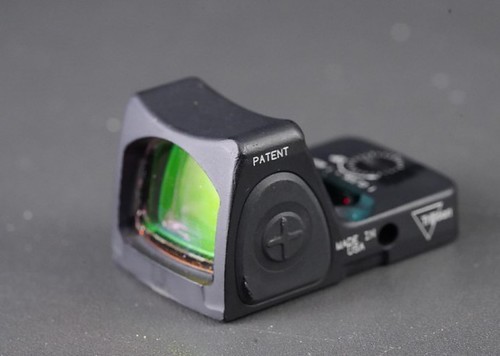
The Trijicon RMR Type 2 is a tough, low-profile reflex sight that works well when I want the optic mounted close to the bore. On a light 20 gauge, that low profile helps keep the shotgun lively and natural.
Style: Open reflex sight
Housing: Forged aluminum
Battery: CR2032
Adjustment: Windage and elevation turrets
Known for: Rugged duty-grade construction
Best use: Low-profile shotgun builds and rough use
Pros
Very rugged for its size
Low-profile design
Lightweight
Proven optic reputation
Good for drilled-and-tapped shotgun mounts
Cons
Smaller window than larger reflex sights
Battery access can depend on mounting setup
Usually needs a specific RMR-pattern mount or plate
My personal experience with the RMR Type 2 is that it disappears on the gun. I notice the dot, not the optic body. That is a big deal on a 20 gauge because I do not want to ruin the shotgun’s balance with a bulky sight.
Online customer feedback usually centers on the RMR’s toughness and reliability. Some users mention that the window is smaller than newer competition-style optics, but many still trust it because it handles abuse well.
For mounting, the Trijicon RMR Type 2 uses the RMR footprint. It will not usually mount directly to a standard 20 gauge receiver by itself. It needs an RMR-compatible shotgun mount, a Picatinny-to-RMR adapter, or an optic plate designed for the shotgun. With the right low mount, it is one of the cleanest setups available.
➤➤➤ Click Here to Check Price on Amazon
➤➤➤ Click Here to Check Price on OpticsPlanet
➤➤➤ Click Here to Check Price on EuroOptic
Vortex Venom

The Vortex Venom is a lightweight open reflex sight that fits well on a 20 gauge hunting shotgun. I like it most for turkey and general field use where I want a simple dot without much extra weight.
Dot size: Commonly available in 3 MOA or 6 MOA versions
Style: Open reflex sight
Battery: CR1632
Design: Compact top-mounted controls
Best use: Hunting and lightweight shotgun setups
Mounting style: Reflex footprint with adapter options
Pros
Lightweight
Simple controls
Good value
Low-profile feel
Easy dot pickup for hunting distances
Cons
Open emitter can collect debris
Not as rugged as premium duty optics
Needs the right base or adapter
My personal experience with the Vortex Venom is that it keeps a 20 gauge feeling quick. I especially like a larger dot version for turkey hunting because it is easy to see against feathers, brush, and uneven light. It is not my first pick for the harshest use, but for a practical hunting shotgun, it makes sense.
Online customer feedback is generally positive for ease of use, brightness, and value. Some customers prefer stronger enclosed optics for heavy abuse, but many hunters like the Venom because it is compact and easy to mount.
For mounting, the Vortex Venom does not usually mount directly to a shotgun receiver without help. It needs a compatible reflex mount, a Picatinny adapter, or a shotgun-specific optic plate. On a drilled-and-tapped 20 gauge, adding a rail and then mounting the Venom is usually the simplest route.
➤➤➤ Click Here to Check Price on Amazon
➤➤➤ Click Here to Check Price on OpticsPlanet
➤➤➤ Click Here to Check Price on EuroOptic
Burris FastFire 3
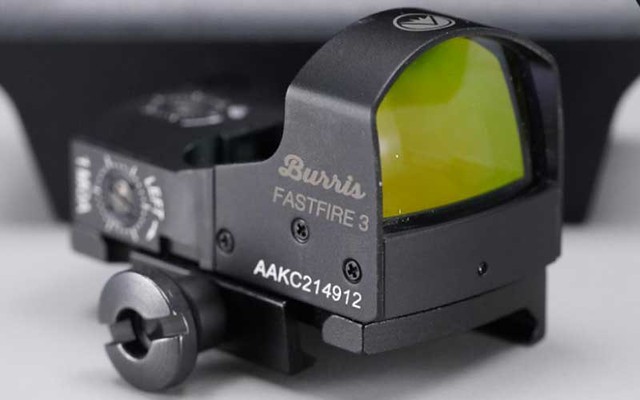
The Burris FastFire 3 is one of the easiest red dots to recommend for a budget-conscious 20 gauge owner. It is compact, proven, and simple enough that I can hand it to a newer shooter without much explanation.
Style: Open reflex sight
Dot size: Commonly offered in 3 MOA or 8 MOA
Battery: CR1632
Brightness: Automatic and manual brightness options
Best use: Budget shotgun builds, hunting, range use
Design: Compact reflex optic
Pros
Good price-to-performance balance
Lightweight
Simple to operate
Works well for hunting distances
Proven on many shotgun setups
Cons
Not enclosed
Less premium feel than higher-end optics
Adapter or rail often required
My personal experience with the FastFire 3 is that it gives me the practical benefits of a red dot without making the setup complicated. On a 20 gauge, I like it for shorter-range hunting where speed matters more than tiny precision.
Online customer feedback usually praises the FastFire 3 for value, light weight, and simplicity. Some users report that it is not as refined as more expensive optics, but many still like it as an affordable shotgun red dot.
For mounting, the Burris FastFire 3 generally needs a compatible base, plate, or Picatinny adapter. It does not directly attach to most standard 20 gauge receivers unless the shotgun already has a compatible optic cut or mount. A rail-mounted setup is usually the easiest solution.
➤➤➤ Click Here to Check Price on Amazon
➤➤➤ Click Here to Check Price on OpticsPlanet
➤➤➤ Click Here to Check Price on EuroOptic
Sig Sauer Romeo5
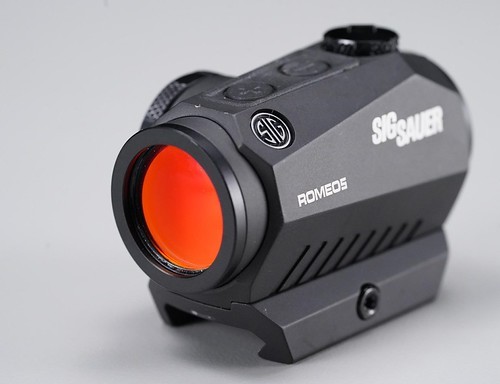
The Sig Sauer Romeo5 is my pick when someone wants an affordable enclosed tube-style red dot for a 20 gauge. It is not as premium as the Aimpoint, but it gives me a covered emitter, easy rail mounting, and a very usable dot.
Dot size: 2 MOA
Style: Compact enclosed tube red dot
Battery: CR2032
Feature: Motion-activated illumination
Mounting: Commonly used on Picatinny rails
Best use: Affordable all-around shotgun setup
Pros
Strong value
Enclosed emitter
Easy to mount on a rail
Motion activation is convenient
Good choice for general use
Cons
Not as refined as premium optics
Included mount height may not be ideal for every shotgun
2 MOA dot may be small for some close-range hunting
My personal experience with the Romeo5 is that it is one of the easiest budget red dots to live with. On a 20 gauge with a receiver rail, it installs quickly and gives a clean sight picture. I like it most for range use, casual hunting, and utility shotgun setups.
Online customer feedback is usually very positive for the money. Buyers often praise the battery life, motion activation, and overall reliability. The most common criticism is that it is not in the same class as high-end duty optics, which is fair considering the price.
For mounting, the Sig Sauer Romeo5 mounts directly to a Picatinny rail with its rail mount. If the 20 gauge does not have a rail, it will need a receiver rail or shotgun-specific rail base first. I would also pay attention to mount height because shotgun cheek welds are usually lower than AR-style cheek welds.
➤➤➤ Click Here to Check Price on Amazon
➤➤➤ Click Here to Check Price on OpticsPlanet
➤➤➤ Click Here to Check Price on EuroOptic
How to Choose the Right Red Dot Sight
For a 20 gauge, I start with weight and mounting height. A 20 gauge usually feels lighter and faster than a 12 gauge, so I do not want a huge optic that ruins the handling. A compact tube sight like the Aimpoint Micro T-2 or Sig Sauer Romeo5 works well when I want protection from weather and debris. A reflex sight like the Trijicon RMR Type 2, Vortex Venom, or Burris FastFire 3 works well when I want the lowest, lightest setup.
Next, I look at the dot size. A 2 MOA dot is precise and works well for slug use or tighter aiming. A larger dot or circle-dot reticle can be faster for turkey, clays, or close-range targets. For most 20 gauge hunting, I prefer a dot that is bright, easy to see, and not too fine.
Mounting matters just as much as the optic. If my shotgun has a Picatinny rail, tube-style red dots are simple. If I want a low-profile reflex sight, I usually need a dedicated plate or adapter. I also try to keep the optic low enough that I can maintain a natural cheek weld.
Finally, I consider weather. For wet turkey woods, duck blinds, or rough field use, I lean toward enclosed optics. For lighter fair-weather hunting, an open reflex sight is often faster and more compact.
FAQs
Is a red dot good on a 20 gauge shotgun?
Yes. I like a red dot on a 20 gauge because it helps me aim faster, especially with slugs, turkey loads, and quick close-range shots.
What dot size is best for a 20 gauge?
For general use, I like a 2 MOA to 3 MOA dot. For turkey hunting or close-range work, a larger dot or circle-dot reticle can be easier to pick up quickly.
Do I need a rail to mount a red dot on a 20 gauge?
Usually, yes. Many 20 gauge shotguns need a Picatinny rail, receiver mount, cantilever barrel, or optic-specific adapter plate before a red dot can be installed.
Is an open or enclosed red dot better for a 20 gauge?
I prefer enclosed red dots for rough weather and hard use. Open reflex sights are lighter and lower, but they expose the emitter to rain, snow, mud, and debris.
Will a red dot handle 20 gauge recoil?
A quality red dot should handle 20 gauge recoil without trouble. I would still avoid very cheap optics because shotgun recoil can expose weak mounts, electronics, and battery contacts.
Conclusion
The best red dot for a 20 gauge in 2026 depends on how the shotgun will be used, but my strongest overall choice is the Aimpoint Micro T-2. It is compact, rugged, weather-resistant, and dependable enough for serious hunting or defensive use. The HOLOSUN 510C is my favorite for speed, the Trijicon RMR Type 2 is excellent for a rugged low-profile setup, and the Burris FastFire 3 gives strong value for hunters who want a simple optic without spending too much.