Top 6 Best Co Witness Red Dot in 2026
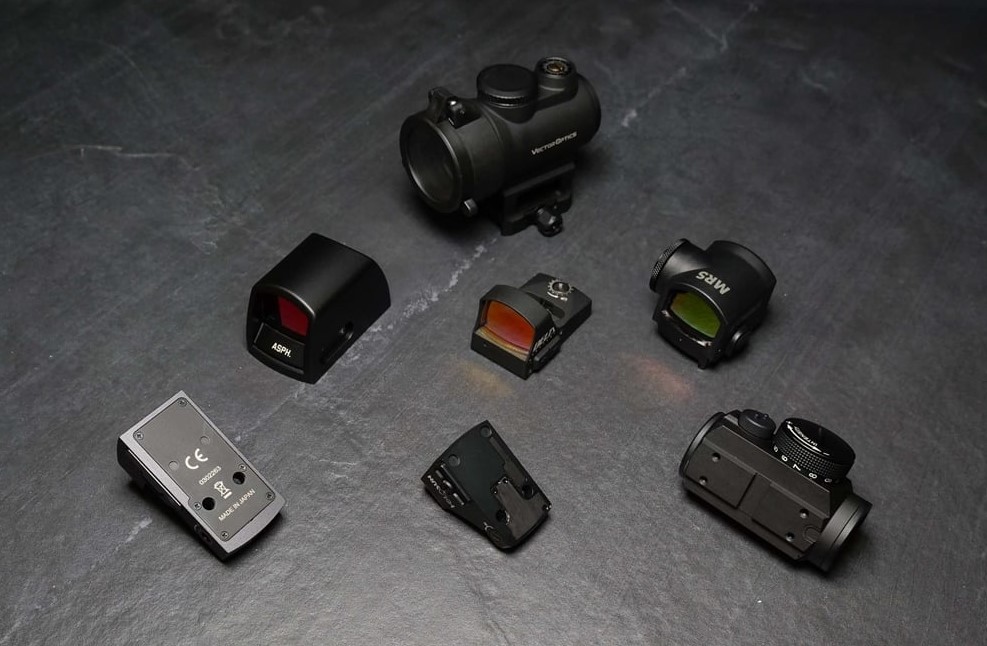
Finding the best co witness red dot in 2026 is mostly about matching the optic height to your iron sights, not just buying the brightest dot or the toughest housing. I’ve used red dots on AR-style rifles, PCCs, and range carbines where co-witnessing mattered because I wanted a fast primary aiming system without completely giving up my backup irons.
For me, a good co-witness red dot needs three things: a dependable dot, a mount height that makes sense, and a window or tube that does not clutter the sight picture. Some optics are better for absolute co-witness, where the irons sit right in the center of the optic. Others feel better in lower 1/3 co-witness, where the irons stay lower in the window and the dot floats above them.
Quick Summary
My top overall pick is the Aimpoint PRO because it is durable, simple, and already feels purpose-built for AR co-witness setups. The Aimpoint Duty RDS is my favorite compact duty-style option, while the Holosun 510C gives the fastest open-window feel. For budget builds, the Sig Sauer Romeo5 remains one of the easiest recommendations because it includes practical mount options and keeps the dot clear enough for serious range use.
Top Product List
Aimpoint PRO — Best for overall co-witness reliability
Aimpoint Duty RDS — Best for compact duty carbines
HOLOSUN 510C — Best for fast open-window shooting
Sig Sauer Romeo5 — Best for budget AR co-witness builds
Vortex Crossfire — Best for simple range and training rifles
Trijicon MRO — Best for wide field of view
Top 6 Best Co Witness Red Dot in 2026
Aimpoint PRO

The Aimpoint PRO is the red dot I trust most when someone asks me for one optic that can live on a defensive rifle, training rifle, or patrol-style carbine. It is not the smallest optic here, but it has the rugged feel and no-nonsense controls I like on a co-witness setup.
2 MOA red dot
30mm tube-style optic
Designed for rifle/carbine use
Compatible with common AR-height mounts
Strong battery life
Durable enclosed construction
Pros
Very durable and proven-feeling
Excellent for AR iron sight co-witness
Clear, simple dot presentation
Easy brightness control
Great all-around rifle optic
Cons
Larger than newer micro dots
Heavier than compact options
Not as sleek for lightweight builds
My personal experience with the Aimpoint PRO has been boring in the best way. I mount it, zero it, and it just works. The tube gives me a very consistent cheek weld reference, and when I run fixed backup irons, the co-witness picture feels natural instead of cramped. I especially like it on rifles where reliability matters more to me than shaving a few ounces.
Online customer feedback is generally strong around durability, battery life, and ease of use. Most buyers seem to appreciate that it feels like a serious rifle optic rather than a fragile accessory. The main complaint I see is size and weight compared with newer micro red dots.
For mounting, the Aimpoint PRO is one of the easier red dots to set up for co-witness on an AR-style rifle. With the right AR-height mount, it can be configured for absolute or lower 1/3 co-witness. It does not mount directly to pistol slides; it is best treated as a rifle optic, and mount height determines the co-witness result.
➤➤➤ Click Here to Check Price on Amazon
➤➤➤ Click Here to Check Price on OpticsPlanet
➤➤➤ Click Here to Check Price on EuroOptic
Aimpoint Duty RDS
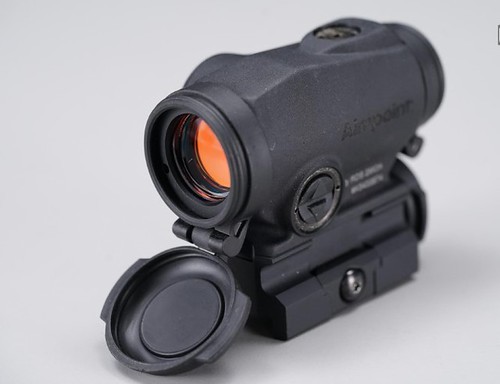
The Aimpoint Duty RDS is the one I like when I want Aimpoint toughness in a smaller, cleaner package than the PRO. It feels made for modern carbines where I still want backup irons visible but do not want a bulky optic dominating the rail.
Compact enclosed red dot
2 MOA dot style
Rifle/carbine-focused design
Durable sealed housing
Compatible with AR-height mounting setups
Simple push-button controls
Pros
Compact but still rugged
Good choice for defensive carbines
Clean sight picture
Lighter than the Aimpoint PRO
Works well with backup irons
Cons
More expensive than budget dots
Smaller controls than large tube optics
Mount choice matters for exact co-witness height
In my use, the Duty RDS feels quicker and handier than the PRO on lightweight rifles. I like it on a carbine where I want lower 1/3 co-witness because the irons stay out of my main view until I need them. The dot is crisp enough for fast drills, and the enclosed design gives me more confidence than an open reflex sight in bad weather.
Customer feedback usually centers on Aimpoint’s reputation, rugged construction, and the practical size. Some users prefer the larger Aimpoint PRO because it feels more traditional, but many like the Duty RDS because it balances better on shorter or lighter rifles.
For mounting, the Duty RDS requires the correct mount height for your co-witness preference. It does not magically co-witness by itself; the mount decides whether your irons sit absolute or lower 1/3. On most AR-style setups, I would use an AR-height mount and verify the iron sight alignment before final zeroing.
➤➤➤ Click Here to Check Price on Amazon
➤➤➤ Click Here to Check Price on OpticsPlanet
➤➤➤ Click Here to Check Price on EuroOptic
HOLOSUN 510C
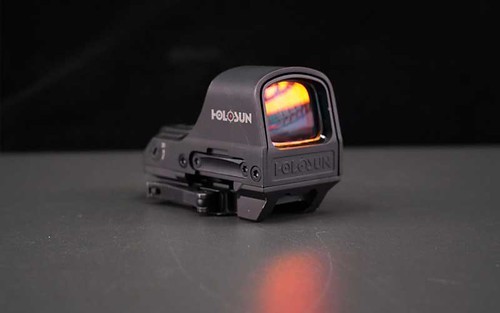
The Holosun 510C is my favorite choice here for speed. Its open reflex window gives me a wider, less tunnel-like sight picture than most tube dots, and that makes it very comfortable for close-range shooting, transitions, and quick target pickup.
Open reflex-style rifle optic
Large viewing window
Multi-reticle style design
Solar-assisted capability on common models
Quick-detach style mounting setup
Designed for rifle and carbine use
Pros
Very fast sight picture
Large window is easy to track
Great for range and competition-style shooting
Reticle options are useful
Comfortable with both eyes open
Cons
Open emitter is more exposed
Bulkier than micro dots
Not my first pick for harsh duty use
My personal experience with the 510C has been very positive on range carbines and PCC-style setups. I can pick up the reticle quickly from awkward positions, and the larger window helps when my cheek weld is not perfect. When I’m shooting fast, this optic feels more forgiving than a small tube red dot.
Online customer feedback often praises the big window, bright reticle, and value for the feature set. Some buyers mention that it feels less sealed and protected than fully enclosed duty optics, which matches my own view of where it fits best.
For mounting, the Holosun 510C uses its included rifle-style mount configuration and can work with AR backup irons depending on height. It may provide a lower 1/3-style sight picture on many AR setups, but exact co-witness depends on your specific iron sights and mount. It generally does not mount directly to pistol slides without a dedicated adapter system.
➤➤➤ Click Here to Check Price on Amazon
➤➤➤ Click Here to Check Price on OpticsPlanet
➤➤➤ Click Here to Check Price on EuroOptic
Sig Sauer Romeo5
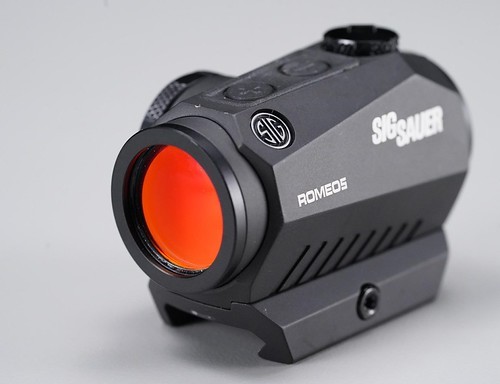
The Sig Sauer Romeo5 is the red dot I recommend when someone wants a practical co-witness setup without spending Aimpoint money. It has a compact tube design, a simple dot, and enough mounting flexibility to make it work on many AR builds.
Compact 1x red dot
2 MOA dot
Commonly used on AR-style rifles
Includes practical mounting options on many packages
Motion-activated illumination on common versions
Enclosed tube design
Pros
Excellent value
Easy to mount on AR platforms
Compact and lightweight
Simple controls
Good starter co-witness optic
Cons
Not as rugged as premium duty optics
Glass and dot quality are not top-tier
Included mount quality may vary by package
I’ve used the Romeo5 on budget carbines where I wanted a reliable enough dot for training without overspending. For the money, it is hard to beat. The dot is easy to pick up, and when paired with backup irons, it gives a very usable co-witness picture. I would not call it bombproof, but I do think it is one of the smartest entry-level picks.
Customer feedback is usually very positive because buyers feel they get a lot for the price. People like the battery-saving motion activation, compact size, and included mounts. The most common criticism is that it does not feel as refined or rugged as more expensive optics.
For mounting, the Romeo5 often comes with mount options that make AR co-witness straightforward. Depending on the included riser, it can be set up for absolute or lower 1/3 co-witness. I always check the package details because not every bundle includes the same mount.
➤➤➤ Click Here to Check Price on Amazon
➤➤➤ Click Here to Check Price on OpticsPlanet
➤➤➤ Click Here to Check Price on EuroOptic
Vortex Crossfire

The Vortex Crossfire is a simple, dependable red dot for shooters who want a clean co-witness setup for training, casual range use, or a general-purpose rifle. I like it because it does not try to be complicated.
Compact red dot sight
2 MOA dot style
Enclosed tube construction
Common AR mounting compatibility
Simple brightness controls
Lightweight rifle-friendly design
Pros
Simple and easy to use
Good value
Clean dot for range work
Lightweight
Good choice for training rifles
Cons
Not as feature-rich as Holosun options
Not as proven as premium duty optics
Basic design may feel plain
My experience with the Crossfire has been that it is a “set it and train” optic. I do not choose it for maximum features; I choose it when I want a straightforward red dot that lines up well with irons and keeps the rifle light. It is especially appealing for newer shooters because the learning curve is low.
Customer feedback usually praises the value, clarity, and Vortex support reputation. Some users want more advanced features, but most understand that the Crossfire is built around simplicity rather than reticle tricks or premium-grade durability.
For mounting, the Vortex Crossfire needs the appropriate riser height for co-witness. On an AR-style rifle, the correct mount can give you an absolute or lower 1/3 co-witness. It does not mount directly to a handgun slide; it is mainly a rifle or carbine red dot.
➤➤➤ Click Here to Check Price on Amazon
➤➤➤ Click Here to Check Price on OpticsPlanet
➤➤➤ Click Here to Check Price on EuroOptic
Trijicon MRO
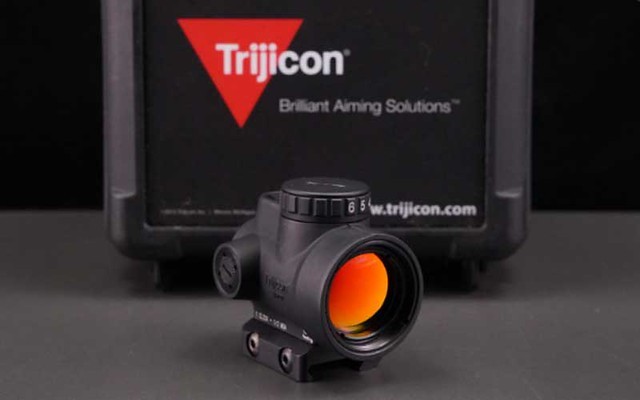
The Trijicon MRO is the red dot I like when I want a wider-feeling view than many compact tube optics. It has a distinctive housing shape, strong brand reputation, and a sight picture that works well for quick rifle shooting.
Compact enclosed red dot
Large objective-style viewing area
Rifle/carbine-focused optic
Durable housing
Compatible with aftermarket AR-height mounts
Simple illumination controls
Pros
Wide-feeling field of view
Rugged construction
Good for fast carbine shooting
Compact compared with full-size tube optics
Strong option for lower 1/3 co-witness
Cons
Mount usually needs to be chosen carefully
More expensive than entry-level dots
Some shooters prefer a traditional tube view
In my hands, the MRO feels fast because the viewing area seems more open than many small tube dots. I like it most with a lower 1/3 setup, where my irons are available but not visually crowding the center of the optic. It works well on a serious carbine without making the rifle feel front-heavy.
Online feedback often highlights the tough build, wide view, and Trijicon name. Some shooters are picky about optical characteristics, but many still like the MRO as a compact rifle optic with a strong field presence.
For mounting, the Trijicon MRO requires an MRO-compatible mount, and mount height controls the co-witness. It does not mount directly to a standard rail without the correct mount. For AR use, choose an absolute or lower 1/3 MRO mount based on where you want your iron sights to appear in the window.
➤➤➤ Click Here to Check Price on Amazon
➤➤➤ Click Here to Check Price on OpticsPlanet
➤➤➤ Click Here to Check Price on EuroOptic
How to Choose the Right Red Dot Sight
When I choose a co-witness red dot, I start with the firearm. On an AR-15, co-witness is usually easy because flat-top receivers, backup iron sights, and optic risers are common. On shotguns, AKs, PCCs, and pistols, it can be more complicated because rail height, stock height, and sight height vary a lot.
The next decision is absolute versus lower 1/3 co-witness. Absolute co-witness puts the iron sights through the center of the optic. I like it when I want a very direct, traditional sight picture. Lower 1/3 co-witness places the irons lower in the optic window. I prefer lower 1/3 for most carbines because the dot feels less cluttered during fast shooting.
Mount height matters more than many buyers realize. A red dot can be excellent, but if the mount is wrong, the co-witness will feel awkward or may not work at all. For micro dots like the Sig Sauer Romeo5 or Vortex Crossfire, I always check whether the optic includes a low mount, high mount, or both. For optics like the Trijicon MRO, I make sure the mount is specifically made for the optic and the co-witness height I want.
Durability is another big factor. If the rifle is for defense, duty, or hard training, I lean toward Aimpoint or Trijicon. If the rifle is for range work, competition practice, or casual use, I am comfortable choosing Holosun, Sig Sauer, or Vortex depending on budget and features.
Window style also changes the experience. Tube dots are durable and easy to protect. Open reflex optics like the Holosun 510C feel faster and more spacious, but the exposed emitter design is not my first choice for mud, snow, or rough duty conditions.
Finally, think about your backup irons. Fixed irons are always visible, so lower 1/3 can keep the sight picture cleaner. Folding irons give you more flexibility because you can run the red dot alone most of the time and flip the irons up only when needed.
FAQs
What does co-witness mean on a red dot?
Co-witness means your red dot and iron sights line up through the same sighting system. When the dot is zeroed, it should appear in a usable relationship with your front and rear sights.
Is absolute or lower 1/3 co-witness better?
I prefer lower 1/3 co-witness for most AR-style rifles because it keeps the irons lower in the window and gives me a cleaner view. Absolute co-witness is still useful if you want the irons centered in the optic.
Can any red dot co-witness?
Not always. The optic must sit at the correct height for your iron sights. The mount, riser, firearm platform, and sight height all determine whether co-witness will work.
What is the best co witness red dot overall?
My top overall choice is the Aimpoint PRO because it is durable, simple, and very easy to trust on a rifle with backup irons.
Is a budget red dot okay for co-witness?
Yes, as long as the mount height is correct and the optic holds zero. For budget builds, I like the Sig Sauer Romeo5 because it is simple, affordable, and practical for AR co-witness setups.
Conclusion
The best co witness red dot in 2026 depends on your rifle, your budget, and how hard you plan to use the optic. My strongest overall pick is the Aimpoint PRO because it combines ruggedness, simplicity, and proven co-witness practicality better than anything else on this list. For a smaller duty-style setup, I would choose the Aimpoint Duty RDS. For speed and a wide window, I like the Holosun 510C. For budget builds, the Sig Sauer Romeo5 is still the easiest value recommendation.